

Schools in 2026 are very different from what they were even a few years ago. Parents expect faster communication, students are learning through digital platforms, and teachers are balancing both classroom and technology-driven instruction. In the middle of all this change, principals are expected to make schools more efficient, connected, and future-ready.
That’s why digital transformation has become a priority for educational institutions. But successful change doesn’t happen by simply introducing new tools. Schools need a clear digital transformation strategy that aligns technology with learning goals, operations, and long-term growth.
This blog explores how principals can approach digital transformation in a practical and sustainable way, focusing on the systems, processes, and decisions that help schools operate more efficiently while creating a better experience for students, teachers, and parents.
Why Schools Need a Digital Transformation Strategy in 2026
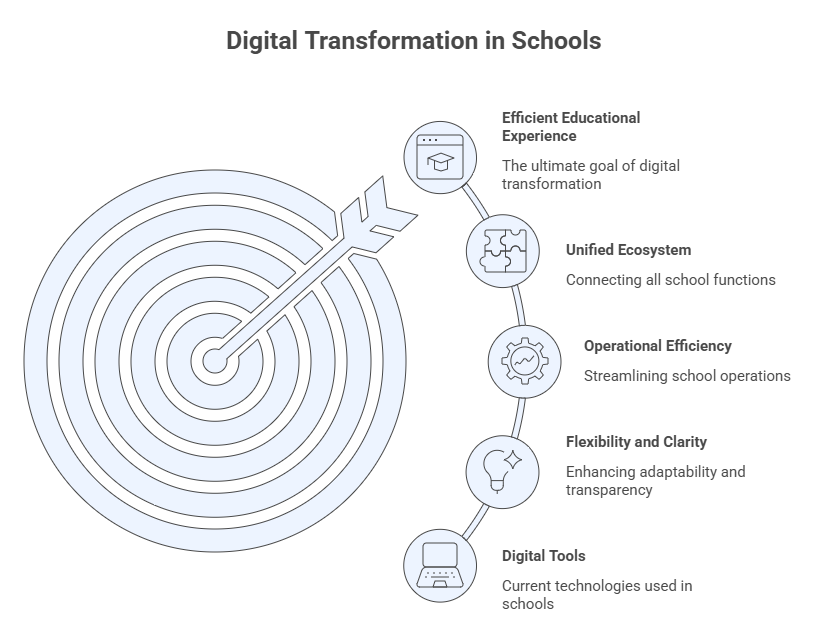
Schools today are already using digital tools in some capacity, from online learning platforms to communication apps and attendance systems. However, using multiple disconnected tools often creates new challenges instead of solving existing ones. Data becomes fragmented, teachers spend more time managing systems, and administrators struggle to maintain consistency across departments. Administrative demands have also increased significantly in recent years. Relying on manual processes or outdated systems slows down decision-making and adds unnecessary pressure on teachers and administrators.
This is where a clear digital transformation strategy becomes important. Rather than adopting technology reactively, schools need a structured approach that connects academics, administration, communication, and operational management into a unified ecosystem
In 2026, digital transformation is no longer limited to introducing smart classrooms or digital devices. It is about building efficient, connected, and scalable systems that improve the overall educational experience while helping schools operate with greater clarity, flexibility, and efficiency.
10 Steps to Start Digital Transformation
1. Evaluate Current Systems
The first step in digital transformation is understanding where your school currently stands.
Principals should begin by auditing:
- Existing infrastructure
- Internet connectivity
- Software and learning tools
- Administrative systems
This helps identify gaps, outdated processes, and areas where technology can create the biggest impact.
2. Set Clear Goals
Digital transformation should always begin with clear objectives.
Schools need to define what they want to achieve, such as:
- Better student engagement
- Improved communication
- Faster administrative processes
- Enhanced academic performance
When goals are clearly defined, it becomes easier to select the right tools and measure progress effectively.
3. Build a Digital Transformation Strategy
A successful digital transformation strategy requires a clear roadmap. Instead of implementing everything at once, principals should prioritize initiatives based on urgency, budget, and long-term value. The strategy should include:
- Short-term goals
- Long-term vision
- Budget planning
- Training requirements
- Technology adoption phases
A phased approach reduces disruption and allows smoother implementation.
4. Invest in the Right Technology
Technology investments should solve real problems rather than follow trends. Schools should focus on tools that improve teaching, learning, and administration, such as:
- Learning Management Systems (LMS)
- Smart classroom solutions
- School ERP systems
- Assessment and communication platforms
The right technology should be scalable, user-friendly, and aligned with the school’s goals.
5. Train Teachers and Staff
Even the best technology will fail if users are not comfortable using it.
Teacher and staff training is one of the most important parts of digital transformation. Schools should conduct regular workshops and hands-on training sessions to build confidence and digital skills.
When teachers understand how technology improves learning outcomes, adoption becomes much smoother.
6. Focus on Student-Centric Learning
Digital transformation should ultimately benefit students. Modern learning environments should encourage:
- Interactive learning
- Personalized learning paths
- Collaboration
- Real-time feedback
Students today respond better to engaging and flexible learning experiences. Technology should help create classrooms that are more adaptive and student-focused.
7. Ensure Data Security
As schools adopt more digital systems, protecting student and institutional data becomes critical.
Principals must ensure:
- Secure login systems
- Regular data backups
- Privacy protection policies
- Cybersecurity awareness among staff
A secure digital environment builds trust among parents, students, and teachers.
8. Encourage a Digital-First Culture
Technology adoption is not only about systems,it is also about mindset.
Schools need to create a culture where digital tools are viewed as part of everyday learning and operations. This requires support from leadership, teachers, students, and parents.
Encouraging experimentation, innovation, and openness to change helps schools transition more successfully into digitally enabled environments.
9. Monitor Progress
Digital transformation is an ongoing process, not a one-time project.
Schools should regularly track:
- Student engagement levels
- Academic performance
- Teacher adoption rates
- Operational efficiency improvements
Monitoring outcomes helps principals understand what is working and where adjustments are needed.
10. Collaborate with Experts
Many schools struggle because they try to manage digital transformation alone.
Collaborating with EdTech providers, consultants, and technology partners can simplify the process. Experienced partners can help schools:
- Choose the right solutions
- Implement systems effectively
- Train staff
- Avoid common mistakes
Expert guidance often saves both time and resources.
Common Challenges in Digital Transformation
While digital transformation offers significant benefits, schools often face a few common challenges during implementation.
1. Budget and Infrastructure Limitations
Introducing new technologies requires investment in software, devices, training, and system maintenance. For many schools, especially smaller institutions, managing these costs can be difficult initially.
2. Resistance to Change
Teachers, staff, and parents may feel hesitant about adopting new systems due to unfamiliarity or concerns about complexity. Without proper guidance and training, adaptation can take time.
3. Limited Technical Expertise
Some schools may not have the internal technical support needed to manage implementation, integration, or ongoing maintenance effectively.
4. System Integration Issues
Using multiple disconnected tools can create inefficiencies instead of solving them. Schools need systems that work together smoothly to ensure better coordination and workflow management.
Despite these challenges, digital transformation becomes much easier when schools follow a structured and phased approach. Partnering with integrated solutions like NAVNEET TOPTECH helps schools streamline academics, administration, communication, assessments, and operational management through a single connected platform, reducing complexity and making implementation more efficient and scalable.
Leading Your School Through Digital Transformation
For principals, digital transformation is ultimately about creating a school environment that can function more effectively in a rapidly changing educational landscape. The goal is not to adopt every new technology trend, but to implement systems that genuinely improve learning, simplify operations, and support teachers in their day-to-day responsibilities.
A strong digital transformation strategy helps principals make these decisions with greater clarity, consistency, and long-term direction. Meaningful transformation grows through practical improvements, better coordination, and gradual adoption that aligns with the school’s unique needs and goals. Schools that begin taking these steps today are not only improving efficiency in the present, but also building a stronger, more connected, and future-ready learning environment for the next generation.