

As students move into Class 9, parents often find themselves navigating a few important academic decisions. Along with subjects and future academic plans, language selection is one area that can raise questions, especially when schools ask families to confirm language choices more formally.
Under the CBSE three-language policy, students continue learning multiple languages as part of their school education. This leaves many parents with practical questions: Which languages can students choose?
Are the requirements the same in every school? Can exemptions be granted in certain situations? Understanding how the policy works can make the selection process much easier.
In this article, we’ll look at how the three-language formula applies to Class 9 students, the language options schools may offer, and a few important points parents should know before making a decision.
Why Does CBSE Encourage Learning Three Languages?
The three-language formula reflects the broader vision of the National Education Policy (NEP) 2020, which encourages multilingual learning as a way to support students’ overall development.
By learning more than one language, students are exposed to different ways of communicating, thinking, and understanding the world around them.
Over time, multilingual learning can contribute to stronger communication skills, greater cultural awareness, and increased comfort in multilingual settings. This aligns with the National Curriculum Framework for School Education (NCFSE) 2023, which emphasises the role of language learning in strengthening communication and cultural understanding, as well as UNESCO’s guidance on multilingual education, which highlights its contribution to inclusion, learning, and intercultural awareness.
What Does the Three-Language Formula Mean for Class 9 Students?
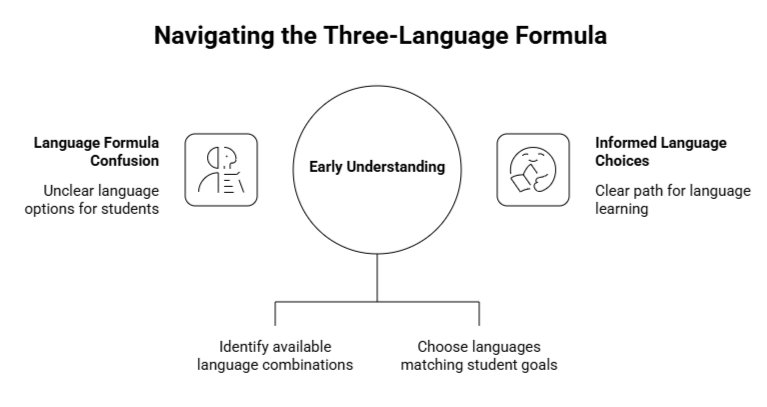
For most Class 9 students, the three-language formula means continuing to study three languages as part of their academic programme. However, the exact combination of languages available often depends on the school.
While some schools offer a wider selection of languages, others may provide a more limited set of options based on factors such as faculty availability, student demand, and curriculum planning. As a result, two CBSE schools may follow the same policy framework while offering different language combinations.
Understanding these choices early can help avoid confusion during admissions and ensure that students continue with a language combination that aligns with both school requirements and their learning needs.
Why Language Planning Matters in Class 9
By the time students reach Class 9, academic planning often becomes more structured. While language learning continues to be an important part of the curriculum, schools may require students to confirm their language selections in advance to support timetable planning, subject allocation, and academic record management.
The planning process can be especially important for students transferring from another school or education board, as previous academic records may be reviewed to determine language eligibility and placement.
Taking a little time to review the available choices, school requirements, and long-term academic considerations can help students start Class 9 with greater clarity and confidence.
What Language Options Are Usually Available After Class 9?
The language options available to Class 9 students can vary from one school to another. However, most schools typically structure their language offerings around a few common categories.
1. Languages Already Studied in School
In many cases, students continue with at least one language they have been learning in earlier classes. This helps maintain continuity and allows them to build on the reading, writing, and communication skills they have already developed over the years.
2. Additional Indian Languages
Schools may also offer other Indian languages as part of their language combinations. These options can give students the opportunity to strengthen their proficiency in a regional or national language, depending on the subjects offered by the school.
3. Other Approved Language Choices
Some schools may provide additional language options in line with CBSE guidelines. The availability of these subjects often depends on factors such as faculty availability, student enrolment, and the school’s academic planning.
Since language offerings can differ significantly between institutions, it is always advisable to confirm the available options directly with the school before finalising subject selections. Once the choices are clear, parents and students can better evaluate how language selection fits into their overall Class 9 academic planning.
Important Things to Check Before Choosing Languages
Before confirming language selections, a few practical checks can help make the process smoother.
Confirm Which Languages Are Offered
Confirming the available choices and language combinations early can help avoid confusion later.
Review Previous Academic Records
Schools may consider the languages studied in earlier classes before approving certain language combinations.
Understand Assessment Requirements
Each language comes with its own evaluation pattern, coursework requirements, and examinations. Having a clear understanding of these expectations can help students choose a combination they feel comfortable managing alongside their other subjects.
Follow School Timelines
Schools often have specific deadlines for confirming subject and language selections. Completing the process within the required timeframe can help avoid last-minute changes and administrative complications.
Seek Academic Guidance if Needed
If there is uncertainty about the available options or the best choice for a student’s needs, speaking with teachers, or school counselors can provide valuable clarity before a final decision is made.
Situations Where Language Exemptions May Be Considered
While the three-language policy provides a structured framework, certain situations may require flexibility. Schools may review exemption requests on a case-by-case basis.
| Situation | What It May Mean |
| School Transfer or Relocation | Students moving from another state, region, or education board may face challenges in continuing the same language combination. |
| Special Educational Requirements | Schools may provide accommodations where approved support measures apply. |
| Language Not Offered by the School | Alternative arrangements may be considered if a previously studied language is not available in the new school. |
| International School Transfer | Students joining from international or overseas education systems may be assessed based on their academic background and language history. |
Since exemption requests are often evaluated individually, it is always advisable to consult the school directly for guidance on specific situations.
Preparing for a Multilingual Future
While language selection is an important part of Class 9 planning, its impact often extends far beyond the classroom. The ability to communicate across languages can open doors to new ideas, cultures, and opportunities while helping students navigate an increasingly connected world.
As schools continue to embrace the vision of multilingual learning, language education remains not just a curriculum requirement, but an opportunity for students to develop skills that can support them throughout their academic journey and beyond.
FAQs
Q1. Is the third language compulsory in CBSE Class 9 in 2026?
Language requirements may vary depending on the school’s implementation of the CBSE framework. Parents and students should check with their school to understand the language subjects required in Class 9.
Q2. Which languages are offered under the CBSE three-language policy?
There is no single list of language options followed by all schools. The languages available to students depend on the school’s approved curriculum, faculty availability, and academic planning.
Q3. Can students change their language in Class 9 CBSE?
In certain cases, schools may allow language changes. However, approval is typically subject to school policies, language availability, and the student’s previous academic background.
Q4. Is the CBSE language policy connected to the National Education Policy (NEP) 2020?
Yes. The CBSE three-language framework aligns with the vision of NEP 2020, which promotes multilingual learning and encourages students to develop proficiency in more than one language.
Q5. How does the CBSE three-language formula apply in Class 9?
Class 9 students generally continue studying three languages as part of their academic programme. The exact language combinations may differ from one school to another based on the options offered by the institution.