A principal reviewing the academic plan for the new session may have questions: How should teachers introduce Artificial Intelligence to younger students? Does the school need a computer lab for every activity? And how will the new curriculum fit into existing subject periods?
These are some of the practical considerations behind CBSE’s introduction of Computational Thinking and Artificial Intelligence for Classes 3 to 8.
Computational Thinking (CT) is a problem-solving approach that teaches students to break complex problems into smaller steps, recognise patterns, organise information and develop logical solutions. Artificial Intelligence (AI) refers to technology that enables machines to perform tasks such as identifying patterns, interpreting information and making predictions. Together, CT and AI help students understand technology and use it thoughtfully.
Key Takeaways
- CBSE introduced the Computational Thinking and Artificial Intelligence curriculum for Classes 3 to 8 from the 2026–27 academic session.
- The curriculum builds computational thinking skills first and introduces foundational AI literacy progressively.
- Learning includes puzzles, hands-on activities, subject-based worksheets and interdisciplinary projects.
- CBSE has released student resource books and teacher handbooks for Grades 3 to 8.
- Schools should plan for teacher orientation, classroom activities and age-appropriate assessment.
Why Has CBSE Introduced Computational Thinking and AI?
The growing use of AI in everyday life has made it important for students to understand how technology works, where it is useful and what its limitations are. However, learning about AI is not limited to using digital tools or writing code. Students also need the ability to reason, identify patterns, analyse information and solve problems.
The new curriculum follows the direction set by the National Education Policy (NEP) 2020 and the National Curriculum Framework for School Education (NCF-SE) 2023. It places computational thinking at the centre of AI readiness, helping students develop the reasoning skills needed to understand emerging technologies.
CBSE officially launched the curriculum on 1 April 2026 for implementation from the 2026–27 academic session. The Press Information Bureau release on the curriculum launch outlines its objectives, including logical thinking, problem-solving, pattern recognition and responsible technology use.
Schools can also refer to the official CBSE Computational Thinking and Artificial Intelligence curriculum page for the curriculum framework, circulars and learning resources.
What Does the CBSE CT and AI Syllabus Cover for Classes 3 to 8?
The curriculum follows a progressive approach. Students begin with foundational computational thinking and gradually move towards more complex problem-solving, AI concepts and ethical considerations.
| Grade group | Learning focus | Classroom approach |
| Classes 3–5 | Foundational computational thinking, logical reasoning, patterns and problem-solving | Subject-integrated worksheets, puzzles, games and hands-on activities |
| Classes 6–8 | Intermediate computational thinking and introductory AI literacy | Structured problem-solving, data activities, AI concepts and interdisciplinary projects |
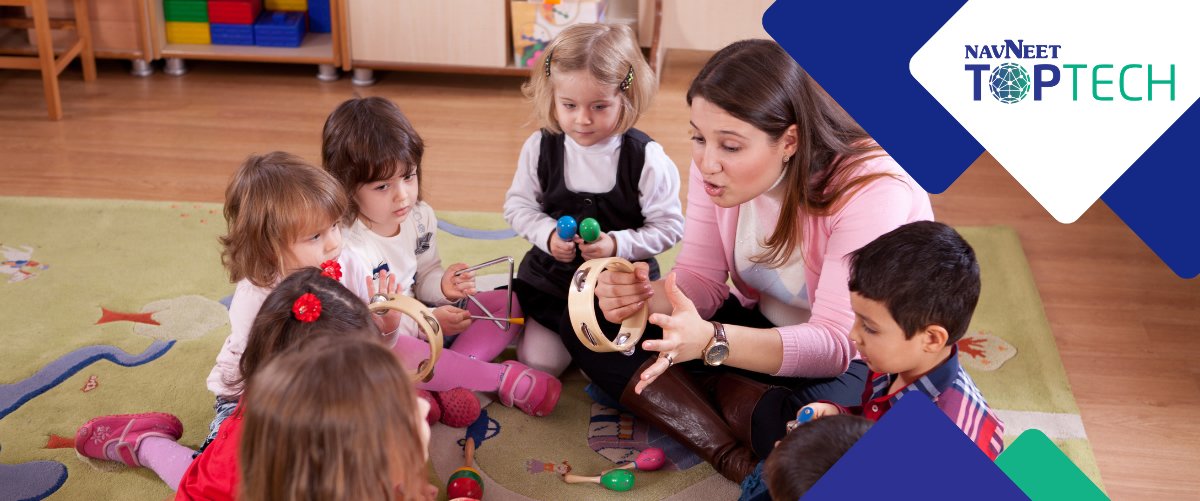
For Classes 3 to 5, computational thinking is integrated with subjects such as Mathematics and The World Around Us. Students practise breaking down problems, identifying patterns and understanding step-by-step instructions through activities connected to their regular lessons.
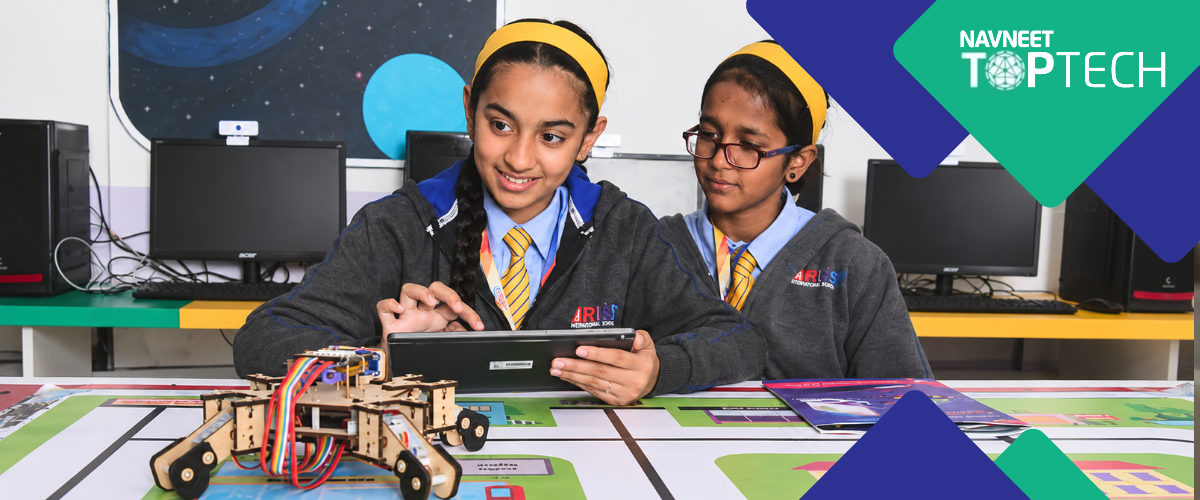
For Classes 6 to 8, the curriculum introduces more advanced computational thinking and foundational AI concepts. Students explore data organisation and representation, pattern recognition, the AI project lifecycle and the role of data in decision-making. They are also introduced to topics such as bias, fairness, privacy and digital footprints.
The framework outlines an annual allocation of approximately 50 hours for Classes 3 to 5 and 100 hours for Classes 6 to 8. Schools should refer to the official curriculum documents for the detailed stage-wise structure and implementation guidance.
What Will Students Learn Through Classroom Activities?
The curriculum places importance on learning by doing. Students do not need to begin with complex software or coding exercises. Teachers can introduce computational thinking through familiar classroom situations.
Some examples include:
- Pattern recognition: Students identify number, shape or colour patterns and explain the rule behind them.
- Step-by-step instructions: Students write instructions for arranging classroom objects or completing a simple task, then check whether the sequence works.
- Problem decomposition: A larger classroom task is divided into smaller steps so students can understand how each part contributes to the outcome.
- Working with data: Students collect classroom information, organise it into tables and interpret simple charts.
- Understanding AI: Students compare how people and AI tools identify patterns in examples such as images or recommendations.
- AI ethics: Students discuss why an AI recommendation may be unfair or inaccurate when the data used to produce it is incomplete or biased.
These activities connect computational thinking with Mathematics, environmental studies, languages and other subjects. They also help students understand that the skills are useful beyond a computer-based lesson.
Are Student Resource Books and Teacher Handbooks Available?
Yes. CBSE has released student and teacher resource books for Classes 3 to 8 through its Academic website. The resources are intended to support classroom implementation and provide structured learning material for different grade groups.
Schools can access the materials through the CBSE CT and AI resource page. The page provides links to the student handbooks and teacher handbooks for each grade, along with the relevant curriculum information.
The resources vary by stage. For Classes 3 to 5, they support foundational computational thinking through questions and activities connected to subject learning. For Classes 6 to 8, they include more advanced CT activities, introductory AI concepts and project-based learning support.
The teacher handbook is particularly useful for understanding how to introduce activities, connect them with subject content and guide students through the learning process.
What Should Schools Do to Prepare Teachers?
Successful implementation will depend on how comfortably teachers can bring these concepts into everyday lessons. Schools should begin by familiarising their academic teams with the curriculum, reviewing the resource books and identifying where activities can fit into existing subject plans.
For Classes 3 to 5, primary teachers can integrate computational thinking into regular subject teaching. In Classes 6 to 8, subject teachers support CT learning, while computer teachers facilitate AI literacy. The curriculum also highlights collaborative teaching and project-based learning.
A practical preparation plan can include:
- Review the curriculum: Academic coordinators should study the grade-wise learning objectives and resource materials.
- Orient teachers: Conduct sessions to explain computational thinking, AI fundamentals and the activities expected at each stage.
- Plan classroom integration: Identify opportunities to connect CT activities with existing subject chapters.
- Prepare assessment methods: Use observation, worksheets, group activities, practical tasks and projects to review student understanding.
- Review implementation: Gather teacher feedback and assess whether students are developing the intended skills.
Schools looking to strengthen their broader approach to educator development can also read NEP 2020 and Teacher Training: Laying the Foundation for School Transformation and explore why CBSE teacher training matters.
How Can Schools Support the Academic Transition?
Introducing a new curriculum requires coordination between school leadership, academic coordinators and teachers. Alongside curriculum familiarisation, schools need organised lesson plans, accessible learning resources, assessment schedules and a way to monitor academic progress.
A school Learning Management System can help coordinate these wider academic processes. TopSchool by NAVNEET TOPTECH supports schools with academic planning, lesson planning, assessments, digital content and teacher tools. It can help teachers and administrators organise their academic workflows while adapting to evolving curriculum requirements.
Explore TopSchool LMS for schools to understand how its academic and teacher-support features can assist school operations.
FAQs
1. Is Computational Thinking and Artificial Intelligence compulsory for Classes 3 to 8?
CBSE has introduced the curriculum for Classes 3 to 8 from the 2026–27 academic session. CBSE-affiliated schools are expected to implement the prescribed curriculum as part of the academic programme.
2. Is there a separate board exam for Computational Thinking and AI?
The curriculum is designed around classroom learning, activities, projects and assessment. CBSE’s framework does not introduce a separate board examination for this course for Classes 3 to 8. Schools should follow the prescribed assessment guidance.
3. Who teaches Computational Thinking and AI in schools?
For Classes 3 to 5, computational thinking is integrated into regular subjects and taught by the respective teachers. In Classes 6 to 8, subject teachers facilitate CT learning, while computer teachers support AI literacy and related projects.
4. Where can schools download the CT and AI resource books?
Schools can download the student resource books and teacher handbooks for Classes 3 to 8 from the official CBSE CT and AI Academic page.
5. Does the curriculum require students to learn coding?
No. The curriculum is broader than coding. It develops logical reasoning, pattern recognition, problem-solving and algorithmic thinking. It also includes unplugged activities that do not require computers.
6. How many hours are allocated to the curriculum each year?
The framework outlines approximately 50 hours annually for Classes 3 to 5 and 100 hours for Classes 6 to 8. Schools should consult the official curriculum documents for detailed planning.
7. Do schools need specialised computer labs to introduce computational thinking?
Not for every activity. Many foundational CT concepts can be introduced through puzzles, games, classroom exercises and paper-based activities. AI literacy for the middle stage can use the resources and facilities available to the school.
Preparing Students for an AI-Enabled Future
CBSE’s new curriculum gives schools a structured way to introduce computational thinking and AI from the middle years of primary education. Its emphasis on problem-solving, practical activities, data awareness and responsible technology use makes teacher preparation and academic planning central to implementation.
Schools can begin by reviewing the official curriculum, familiarising teachers with the resource books and mapping activities to classroom learning goals. With the right academic processes and teacher support, students can build the reasoning skills needed to engage confidently with emerging technologies.
Explore TopSchool by NAVNEET TOPTECH to see how its LMS features can support academic planning, assessments and teacher workflows. Connect with our experts to learn more.