

How to prepare for board exams is one of the most common questions students ask before the examination season. Successful board exam preparation involves creating a study plan, understanding the exam pattern, practicing previous years’ papers, and revising consistently. By following the right preparation strategies, students can reduce stress and improve their performance in board examinations.
Preparing for a board examination can feel overwhelming for many students. The syllabus is extensive, expectations are high, and the pressure to perform well often adds to the stress. However, effective board exam preparation is less about studying endlessly and more about studying strategically. When students understand the exam structure, plan their schedule carefully, and revise consistently, preparation becomes far more manageable.
This guide outlines practical strategies that help students stay organized, confident, and well-prepared throughout the exam season.
Key 2026 Board Exam Highlights
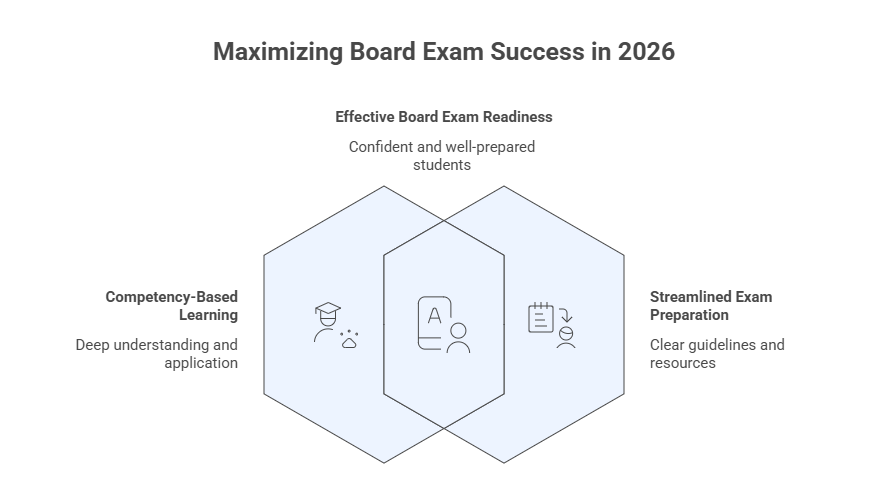
The increasing focus on competency-based learning aligns with the vision of NEP 2020, which encourages conceptual understanding and application-based learning. In recent years, education boards have increasingly focused on competency-based learning rather than rote memorization. Questions are designed to test conceptual clarity, application of knowledge, and analytical thinking.
For the board examination 2026, students can expect question papers that include case-based and application-based questions. Many boards have also streamlined syllabi and provided clearer exam guidelines to help students prepare more effectively.
Another important aspect is the release of the Date Sheet 2026, which outlines the schedule for each subject. Students should regularly check official board announcements to stay updated about exam patterns, syllabus notifications, and schedule updates.
Understanding Your Board Exam Time Table
The board exam time table 2026 plays a crucial role in shaping an effective study strategy. Once the timetable is released, students should carefully review the sequence of subjects and the gap days between exams.
Analyzing the timetable helps students identify which subjects require more preparation time and which ones can be revised closer to the exam date. For example, if two demanding subjects appear consecutively in the Date Sheet 2026, students may need to complete most of the preparation for one subject earlier.
Time management becomes easier when the timetable is used as a planning tool. Students can divide their preparation phase into three stages: concept learning, practice, and revision. By aligning these stages with the board exam time table 2026, students ensure that each subject receives adequate attention.
Creating a weekly or daily schedule based on the timetable also helps maintain consistency and reduces the pressure of last-minute studying.
Effective Board Exam Preparation Strategies
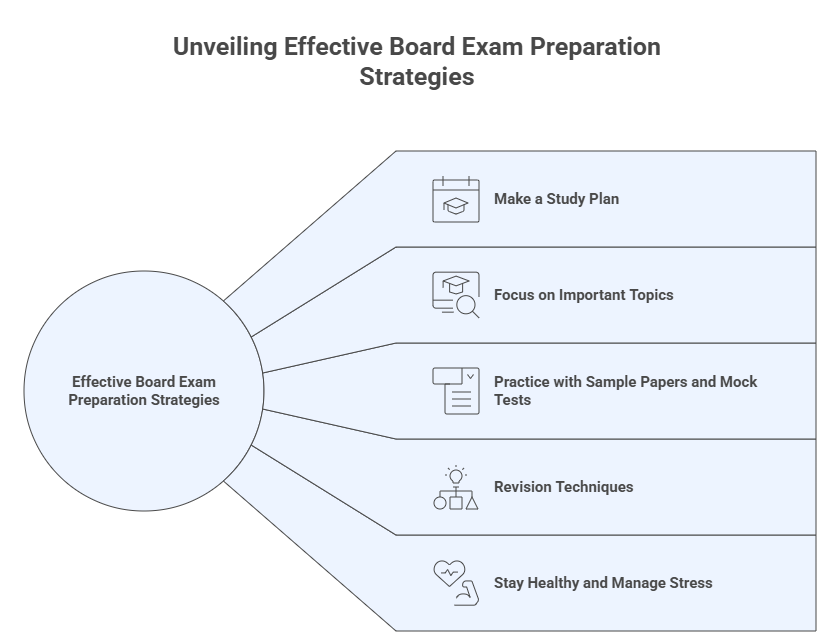
1. Make a Study Plan
A well-structured study plan is the foundation of successful board exam preparation. Students should begin by listing all subjects and chapters included in the syllabus. Once the syllabus is mapped out, they can divide topics across weeks or months based on difficulty and importance.
A balanced plan should allocate more time to challenging subjects while still maintaining regular revision for stronger areas. Setting realistic daily goals helps maintain focus and prevents burnout. Short study sessions with breaks are often more effective than long, uninterrupted hours of studying.
Consistency matters more than intensity. Following a steady routine ensures that the syllabus is completed gradually without unnecessary pressure.
2. Focus on Important Topics
Students should analyze previous years’ question papers to identify commonly tested concepts and chapters with higher marks distribution.
Prioritizing these topics allows students to focus their energy on areas that are more likely to appear in exams. However, it is equally important not to ignore the rest of the syllabus. A balanced approach ensures both depth and coverage.
3. Practice with Sample Papers and Mock Tests
Practicing with sample papers and mock tests is one of the most effective ways to prepare for a board examination. Solving past question papers helps students understand the format of the exam, the style of questions, and the expected answer structure.
Mock tests also help students develop time management skills. When students practice answering questions within the allotted time, they become more comfortable with the exam environment.
Students can review mistakes after each test and strengthen weak concepts before the actual exam.
4. Stay Healthy and Manage Stress
While academic preparation is important, maintaining physical and mental well-being is equally essential during board exam preparation. Adequate sleep helps improve concentration and memory, while a balanced diet provides the energy needed for long study sessions.
Students should also take short breaks between study sessions to prevent fatigue. Activities such as stretching, deep breathing, or short walks can help refresh the mind.
Managing stress through mindfulness techniques or simple relaxation exercises allows students to stay calm and focused throughout the preparation period.Tips for the Last 30 Days Before Exams
During the last 30 days, students should concentrate on revision and practice rather than trying to learn entirely new topics, as this can increase stress and confusion.
A practical strategy is to revisit important chapters, review summary notes, and solve additional sample papers. This helps reinforce understanding and improves exam readiness.
Students should also identify weak areas and dedicate extra time to strengthening those concepts.
Maintaining a steady routine during this period ensures that students enter the exam hall with confidence.
Exam Day Dos and Don’ts
Dos
- Carry your admit card and required stationery
- Reach the exam center early
- Read the entire question paper carefully before starting
- Start with questions you are confident about
- Keep track of the time during the exam
- Review your answers before submitting the paper
Don’ts
- Don’t stay up late the night before the exam
- Don’t skip breakfast or meals before the exam
- Don’t carry prohibited items such as mobile phones or smart devices
- Don’t discuss questions with other students just before entering the exam hall
- Don’t panic if you see unfamiliar questions in the paper
- Don’t ignore the word limit or marks allotted for questions
How to Prepare for Board Exams Successfully in 2026
Successful board exam preparation requires a combination of planning, practice, and consistency. By understanding the exam structure, using the board exam time table 2026 to organize study schedules, and following effective revision techniques, students can approach exams with confidence.
Staying healthy, managing stress, and maintaining a disciplined routine further support academic performance.
For better planning, students can download the board exam time table 2026 and organize their study schedule in line with the exam dates.
FAQs
Q1. How should students prepare for board exams in 2026?
Students should start by understanding the syllabus and exam pattern, creating a study schedule, revising regularly, and practicing sample papers. Consistent preparation and time management are key to performing well in board exams.
Q2. What are the best board exam preparation tips for students?
Some effective board exam preparation tips include following a study plan, focusing on important topics, solving previous years’ question papers, taking mock tests, and maintaining a healthy study-life balance.
Q3. What are the top exam preparation tips for Indian students?
Indian students should prioritize conceptual understanding, regular revision, NCERT-based preparation, and time-bound practice. Staying consistent and avoiding last-minute cramming can significantly improve exam performance.
Q4. How can students create an effective study plan for exam preparation 2026?
Students can create an effective study plan by dividing the syllabus into manageable sections, setting weekly goals, allocating time for revision, and adjusting their schedule according to the board exam timetable.
Q5. How should students approach second board exam preparation?
Students preparing for a second board exam should identify areas where they previously lost marks, strengthen weak concepts, revise important chapters, and practice additional sample papers to improve their performance.
Q6. How many hours should students study daily for board exam preparation?
There is no fixed number of hours for every student. The focus should be on productive and consistent study sessions rather than the total number of hours spent studying.
Q7. Are mock tests important for board exam preparation?
Yes, mock tests help students understand the exam pattern, improve time management, identify weak areas, and build confidence before the actual examination.
Q8. What is the biggest mistake students make while preparing for board exams?
One of the most common mistakes is leaving revision until the last minute. Students should revise regularly throughout their preparation period instead of relying on last-minute study sessions.
Q9. Where can I check the board exam time table 2026?
The board exam time table 2026 is usually released on the official website of the respective education board. Schools also share the timetable with students once it is announced.
Q10. How can I reduce stress and stay motivated during board exam preparation?
Maintaining a balanced routine, taking short breaks, exercising regularly, and staying organized can help reduce stress and keep students motivated during board exam preparation.