
Key Takeaways
- The foundational years are when children develop the reading, language, and number skills they need for future learning.
- Foundational Literacy and Numeracy (FLN) helps children build strong skills in reading with understanding and basic mathematical thinking.
- Regular, activity-based learning can help teachers identify learning gaps early and support children more effectively.
- NIPUN Bharat gives schools clear learning goals to help children achieve foundational literacy and numeracy by Grade 3.
There is a hard truth at the center of NEP 2020: if a child cannot read with understanding and do basic maths by the end of Grade 3, everything taught afterward is built on sand. Foundational Literacy and Numeracy (FLN) is the policy’s answer, and the NIPUN Bharat mission is its delivery vehicle. For schools, the foundational years are not the easy years before “real” academics begin, they are the years that decide whether real academics are possible at all.
What FLN means and why it is non-negotiable
Foundational literacy is the ability to read fluently and understand what is read. Foundational numeracy is the ability to reason with numbers and apply basic mathematics to everyday situations. NEP 2020 sets achieving universal FLN by the end of the foundational stage as its most urgent priority, because a child who clears this bar can learn independently, and a child who does not falls progressively further behind.
The NIPUN Bharat mission in plain terms
NIPUN Bharat (National Initiative for Proficiency in Reading with Understanding and Numeracy) is the national mission to ensure every child attains FLN by Grade 3. It sets stage-wise learning outcomes, or “lakshyas”, that give teachers concrete targets for each step of a child’s early progress. For a school, NIPUN provides a ready scaffold, you do not have to invent the milestones, only deliver against them.
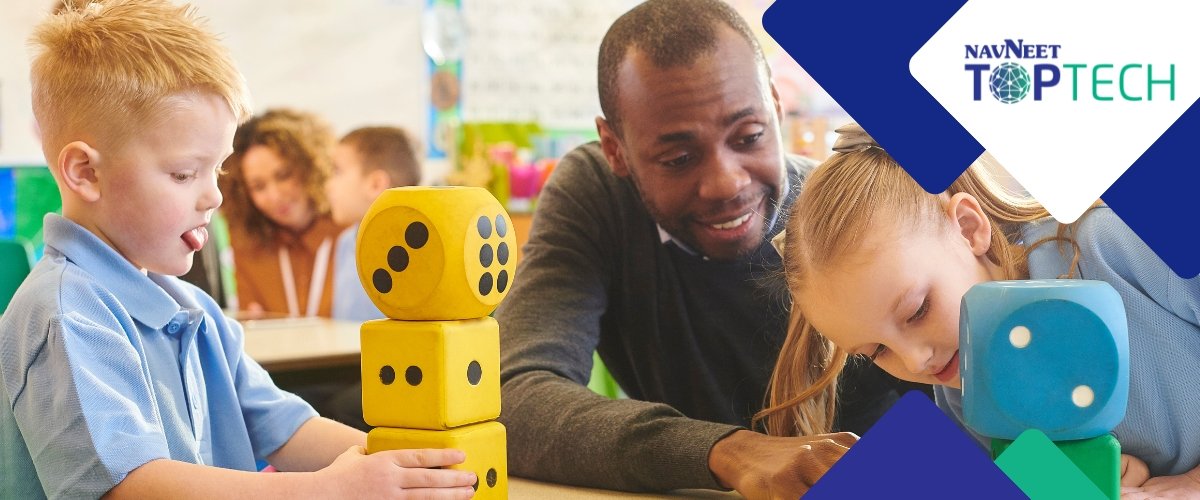
The foundational-stage mindset shift: FLN is achieved through play, story, conversation and activity not worksheets and rote drills. If your early-grade classrooms look like miniature versions of senior classrooms, you are working against the science of how young children learn.
What strong FLN delivery looks like in a classroom
- Print-rich, activity-rich rooms where children handle language and numbers playfully.
- Instruction in the child’s mother tongue or regional language in the earliest years.
- Frequent, low-stakes checks of reading fluency and number sense, used to support not to rank.
- Teachers trained specifically in early-grade pedagogy, which differs sharply from upper-grade teaching.
- Parents engaged as partners in early reading at home.
Measuring what matters in the early years
FLN progress is easy to miss because it is not captured by traditional term exams. A child can pass a Grade 2 test by memorizing and still not reading with understanding. Schools are serious about FLN track reading fluency and number sense continuously, child by child, and intervene the moment a learner stalls because in the foundational years, a small gap left unaddressed becomes an unbridgeable one by Grade 5.
FAQs
1. By what age should a child achieve foundational literacy and numeracy?
NEP 2020 and the NIPUN Bharat mission target universal FLN by the end of Grade 3, around age 8, the point by which a child should be reading with understanding and handling basic numeracy independently.
2. Why is mother-tongue instruction emphasized in the foundational years?
Children grasp foundational concepts faster in a language they already speak. Teaching early literacy and numeracy in the mother tongue or regional language reduces the cognitive load of decoding an unfamiliar language while also learning new concepts.
3. What are the foundational years of literacy and numeracy?
The foundational years are the early years when children develop basic language, reading, writing, and numeracy skills. Under NEP 2020, foundational learning focuses on helping children build these skills by the end of Grade 3.
4. Why are foundational literacy and numeracy important?
Strong FLN skills help children understand lessons, solve basic problems, and learn more independently as they progress to higher grades.
5. How can schools support children in the foundational years?
Schools can use play-based activities, stories, conversations, hands-on learning, and regular low-stakes assessments to build skills and identify learning gaps early.
6. What is the goal of NIPUN Bharat for foundational learning?
NIPUN Bharat aims to ensure that children develop foundational literacy and numeracy skills by the end of Grade 3 through age-appropriate and activity-based learning.
Navneet’s content and phygital learning kits bring FLN to life through age-appropriate, activity-led material in regional languages helping schools hit NIPUN Bharat milestones with resources built for how young children actually learn.