The rapid growth of technology, changing career landscapes, and the evolving needs of students have made it clear that traditional teaching methods alone are no longer sufficient.
Today’s students must develop abilities that go beyond academic knowledge. Skills such as critical thinking, problem-solving, creativity, digital literacy, and collaboration have become essential for success in modern careers and society. This shift has led to the emergence of new age learning, an educational approach that integrates technology, practical experience, and skill-based learning into the classroom.
By adopting innovative teaching strategies, institutions can help students develop the new age skills they need to thrive in the future.
What Is New Age Learning?
New age learning refers to modern teaching approaches that move beyond traditional lecture-based education and focus on interactive, student-centered learning. Instead of relying solely on textbooks and rote memorization, this approach encourages students to actively participate in the learning process through technology, collaboration, and practical experiences.
At the heart of new age education is the idea that learning should prepare students not just for exams but for real-world challenges. This means helping students develop essential competencies such as critical thinking, adaptability, creativity, communication, and digital literacy.
In many modern classrooms, this approach combines several elements:
- Integration of digital tools and technology
- Encouraging curiosity and exploration
- Emphasis on problem-solving and analytical thinking
- Opportunities for collaboration and teamwork
- Development of real-world skills alongside academic knowledge
Schools that embrace new age education can create learning environments that are more engaging, adaptive, and relevant to real-world challenges.
Key New Age Learning Strategies for Schools
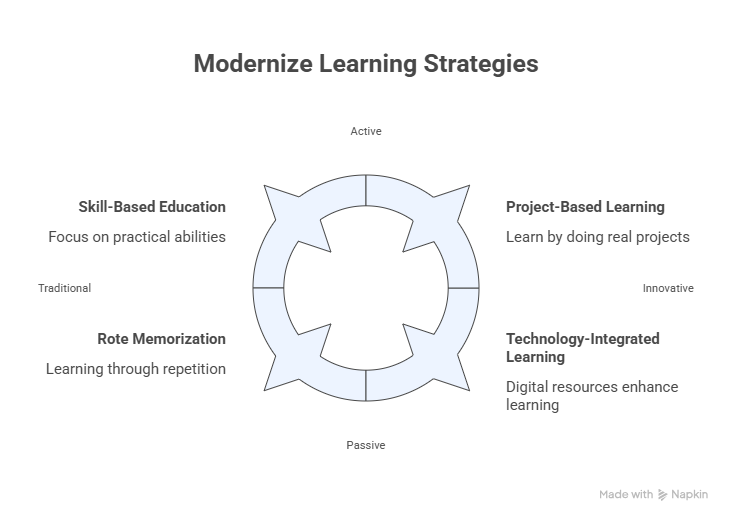
Schools looking to modernize their teaching methods can adopt several strategies that support new age education.
1. Technology-Integrated Learning
Integrating digital resources into classrooms allows teachers to create more interactive learning experiences. When used effectively, technology can enhance understanding by presenting information in multiple formats and allowing students to explore topics more deeply. It also helps students develop digital literacy, one of the most essential new age skills required in modern workplaces
2. Technology-integrated learning may include:
- Smart classrooms with interactive boards and digital displays
- Online learning platforms and educational apps
- Multimedia resources such as videos, simulations, and digital content
- Virtual collaboration tools for group projects
The goal is to use digital tools to support better learning experiences rather than relying on them as the sole method of instruction. Technology partners like NAVNEET TOPTECH help schools bring together digital content, classroom technology, and learning platforms within a single ecosystem. This makes it easier for institutions to introduce technology in a way that supports both teaching and student engagement.
3. Project-Based Learning
Instead of focusing only on theoretical knowledge, Project-Based Learning encourages students to learn by working on real-world projects.
This approach helps students understand how academic concepts apply to practical situations. It also improves their ability to think critically, solve problems creatively, and communicate ideas effectively.
In project-based learning environments, students may:
- Investigate real-life problems
- Conduct research and gather information
- Collaborate with classmates to develop solutions
- Present their findings through reports, presentations, or prototypes
By engaging students in meaningful tasks, project-based learning makes education more relevant and memorable.
4. Personalized Learning
Every student learns differently. Some students grasp concepts quickly, while others require more time or different explanations. Personalized learning recognizes these differences and adapts teaching methods to suit individual learning styles and pace. Technology often plays a role in enabling personalized learning by providing adaptive learning platforms and digital assessments.
In personalized learning environments, teachers may:
- Provide flexible learning materials and resources
- Allow students to progress at their own pace
- Offer additional support for students who need it
- Provide advanced challenges for students who are ready for more complex material
By tailoring instruction to individual needs, schools can ensure that every student has the opportunity to succeed.
5. Collaborative Learning
Collaboration is a vital skill in today’s professional world. Many modern workplaces rely heavily on teamwork and collective problem-solving. Collaborative learning encourages students to work together through activities such as group discussions, team projects, peer feedback sessions etc. When students learn together, they exchange ideas, challenge perspectives, and build communication skills.
This approach also encourages empathy and respect for diverse viewpoints helping students develop interpersonal skills that are essential in both academic and professional environments.
6. Skill-Based Education
Skill-based education prioritizes the development of practical abilities alongside academic knowledge, helping prepare students for future careers and personal growth.
Schools can develop critical thinking and analytical reasoning through debates and inquiry-based activities that encourage students to question and evaluate information. Creativity and innovation can be fostered through open-ended assignments that allow students to explore ideas and experiment with solutions, while digital literacy and competence develop when digital tools and technology are integrated into everyday learning. Similarly, communication skills can be strengthened through classroom presentations and group discussions.
Encouraging curiosity, exploration, and independent learning also helps nurture adaptability and a lifelong learning mindset.
Schools that integrate skill-based education into their curriculum help students become more confident, capable, and prepared for real-world challenges.
Role of Teachers in New Age Education
Teachers play a crucial role as facilitators in implementing new age learning strategies effectively. While technology and modern teaching methods are important, the guidance and support of educators remain central to the learning process.
Teachers help create an environment where students feel comfortable asking questions, experimenting with ideas, and learning from mistakes. They guide students through discussions, encourage exploration, and help learners develop independent thinking skills.
However, implementing new age education strategies requires proper training and support for teachers to become comfortable with technology and use it effectively. When educators are equipped with the right resources, they are better able to translate modern learning approaches into practical teaching.
In this transition, having the right support systems can make a significant difference. Solutions by NAVNEET TOPTECH help schools introduce digital tools and modern teaching practices in a structured way, enabling teachers to adapt comfortably while maintaining meaningful classroom experiences.
Preparing Students for a Changing World
Education today must do more than deliver information. It must prepare students to think independently, adapt to change, and apply their knowledge in real-world situations.
While traditional teaching methods continue to provide an important foundation, they need to evolve alongside the demands of a rapidly changing world.
New age learning strategies allow schools to create more dynamic and meaningful learning environments to encourage students to participate actively in the learning process rather than simply absorb information. More importantly, they help students develop capabilities that extend beyond academic performance.
As the purpose of education continues to shift from memorizing knowledge to applying it, schools that embrace these approaches will be better prepared to guide students toward future success.
FAQs
Q1. What is new age learning and why is it important in schools?
New age learning is a modern approach that combines technology, practical learning, and student participation. It helps students build important skills like critical thinking, creativity, and problem-solving for the future.
Q2. How is new age education different from traditional learning?
Traditional learning focuses mainly on textbooks and lectures. New age education encourages active participation through digital tools, teamwork, and hands-on activities, making learning more engaging and practical.
Q3. What are some effective new learning strategies for schools?
Common new learning strategies include project-based learning, personalized learning, collaborative activities, and technology-integrated classrooms. These methods improve both understanding and student engagement.
Q4. What is new learning system in modern education?
A new learning system is a student-focused way of teaching that combines classroom lessons with digital tools and skill-based learning to create a more interactive experience.
Q5. How do new age study skills help students?
New age study skills improve time management, communication, digital literacy, and independent thinking. These skills support stronger learning and future career readiness.
Q6. How can schools implement new age learning effectively?
Schools can introduce smart classroom tools, digital platforms, and collaborative activities while supporting teachers with the right training and resources.