
Exam season brings a familiar sense of urgency to schools. Students feel the pressure to perform, teachers race against limited revision time, and academic leadership carries the responsibility of ensuring outcomes remain consistent across classrooms. Despite best efforts, exam preparation for students often becomes a reactive process, compressed into the final weeks and driven by repetition rather than clarity.
What makes this challenge more complex today is that exams themselves have changed. Syllabi are broader, questions are increasingly application-based, and success depends less on recall and more on conceptual understanding. Yet, many schools continue to rely on traditional revision methods that were designed for a very different academic landscape.
This blog explores why exam preparation now demands a more structured and intentional approach, how schools can rethink revision and assessment practices, and how platforms like NAVNEET TOPTECH’s TopSchool enable institutions to prepare students for exams in a way that is measurable, sustainable, and aligned with modern learning expectations.
Why Exam Preparation Needs a Smarter Approach Today
Exam preparation has always been demanding, but the gap between how students are expected to perform and how they are prepared has widened significantly in recent years. Traditional methods struggle not because they lack effort, but because they are no longer designed for current academic realities.
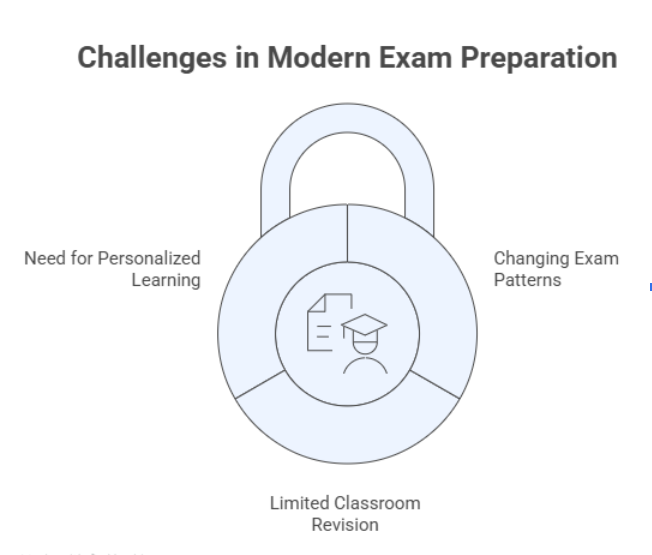
1. Changing exam patterns & syllabus load
Exams today increasingly test a student’s ability to interpret, apply, and connect concepts across chapters. However, revision practices often remain chapter-bound and recall-focused.
At the same time, expanded syllabi leave little room for repeated reinforcement. Students are expected to demonstrate depth of understanding across a wider range of topics, yet revision time is often spent revisiting content broadly rather than addressing conceptual weak points. This mismatch results in students feeling “prepared” in volume, but uncertain in comprehension or clarity.
2. Limited classroom revision time
Classroom revision time is constrained, especially toward the end of the academic term. To manage this pressure, revision is frequently conducted at a class-wide level, with the same pace, material, and depth for all students. While this approach is efficient administratively, it overlooks a fundamental reality: students are not at the same level of readiness. Some require reinforcement of basics, others struggle with specific concepts, and a few need higher-order practice. Yet, uniform revision sessions force all students to move at the same pace, leaving gaps unresolved and time misallocated.
3. Need for personalized and measurable learning
Without clear performance data, understanding how to prepare students for exams relies heavily on assumptions. Teachers often know that gaps exist, but lack precise visibility into where they lie or how widespread they are. As a result, revision planning is based on experience rather than evidence. This makes it difficult to personalise support, prioritise topics effectively, or identify students who may need timely intervention. The absence of measurable indicators of readiness means that problems often surface only during final exams, when corrective action is no longer possible.
Teaching and assessment expectations have gradually moved toward deeper understanding, analytical thinking, and real-world application. However, exam preparation methods have not always evolved at the same pace. Revision still tends to emphasise repetition over reinforcement of concepts and connections. This creates a disconnect where students may remember content but struggle to apply it under exam conditions. The issue is not the intent to move beyond memorisation, but the lack of preparation structures that support this shift meaningfully.
How TopSchool Supports Effective Exam Preparation
Effective exam preparation requires a system that helps schools organise learning, monitor progress, and intervene at the right time. This is where TopSchool functions as an academic enablement platform rather than a standalone tool.
By offering a centralized learning environment, TopSchool allows schools to bring teaching resources, assessments, and performance data into one structured space. This reduces fragmentation and ensures that both teachers and students are working with consistent, curriculum-aligned materials.
The platform’s NEP-aligned digital tools support schools in moving toward competency-based learning and continuous assessment. Instead of relying on periodic exams alone, teachers gain access to ongoing performance indicators that reflect how well students are engaging with concepts over time.
Real-time performance tracking adds another layer of academic clarity. Teachers and academic coordinators can view progress at the student, class, or grade level, enabling timely decisions rather than retrospective analysis. Used effectively, this approach transforms exam preparation from a last-minute exercise into a planned academic process supported by learning management systems for schools.
Top Strategies to Boost Exam Preparation with TopSchool
Effective exam preparation is shaped over time through consistent teaching practices and structured learning experiences rather than short-term interventions. When preparation is approached as part of everyday instruction, students are better positioned to engage with exams confidently and with clarity. TopSchool supports this shift by enabling schools to organise learning, reinforce understanding, and maintain academic continuity throughout the year.
1. Structured curriculum delivery through lesson planning and content alignment
One of the most significant contributors to exam readiness is the pace and structure at which the curriculum is delivered. When teaching progresses in a planned and traceable manner, revision becomes a process of reinforcement rather than recovery. TopSchool supports this through lesson planning tools and curriculum-aligned digital content that help teachers complete the syllabus systematically while maintaining conceptual continuity across chapters.
By the time students enter the exam phase, learning has already been consolidated through structured instruction, reducing reliance on compressed revision schedules.
2. Concept reinforcement through guided digital learning resources
As examinations increasingly assess understanding and application, students require opportunities to engage with concepts beyond initial classroom explanations. TopSchool enables this through guided access to digital learning resources, including visual and animated content, that help students revisit and clarify topics at their own pace.
This continuous reinforcement supports deeper comprehension and allows classroom revision time to be used more effectively for discussion, doubt resolution, and application-based learning.
3. Active revision through chapter-level learning challenges
Revision is most effective when it encourages students to actively reflect on what they have learned. Chapter-level challenges within TopSchool provide structured opportunities for students to engage with content as they progress, helping them consolidate understanding without relying solely on end-term revision.
For teachers, these checkpoints offer insight into how well concepts are being absorbed, enabling timely academic support before gaps widen closer to examinations.
4. Personalised learning pathways that respect individual readiness
Students approach exam preparation with varying levels of confidence and comprehension. A uniform revision approach often overlooks these differences, leading to inefficiencies in both time and effort. TopSchool supports more responsive preparation by allowing learning pathways to adapt to individual student needs.
This flexibility enables students to revisit specific concepts as required, ensuring that preparation time is directed toward areas that genuinely need reinforcement rather than repeated coverage of familiar material.
5. Academic visibility to guide focused preparation
Effective preparation depends not only on teaching effort but also on visibility into learning progress. Through reports, dashboards, and comprehensive academic views, TopSchool provides schools with ongoing insight into curriculum coverage and student engagement.
This visibility supports informed academic planning and allows teachers and coordinators to guide revision efforts with greater precision, ensuring that preparation remains proactive rather than reactive.
6. Balanced academic workload during exam periods
Sustained preparation requires balance. Excessive or uneven workloads can undermine focus and increase stress, particularly during exam periods. TopSchool helps schools monitor and manage student workload more thoughtfully, supporting a preparation environment that prioritises consistency and well-being alongside academic rigour.
Benefits of Using TopSchool for Exam Preparation
When exam preparation is integrated into daily teaching and learning practices, its impact extends beyond individual assessments.
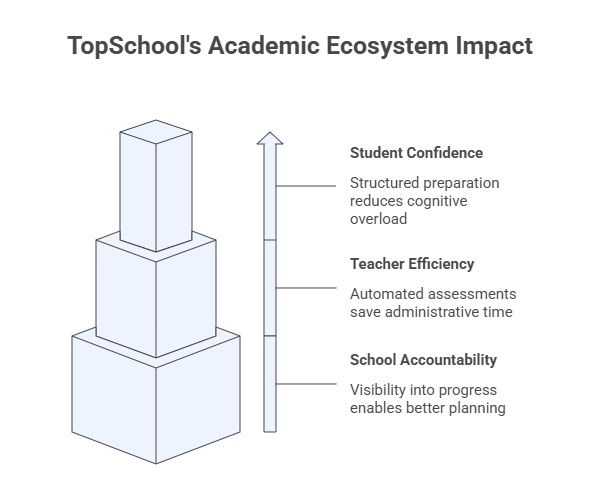
For students, a structured learning environment with consistent reinforcement reduces uncertainty and cognitive overload. Clear progression through the curriculum, supported by accessible learning resources, helps students approach examinations with confidence and conceptual clarity.
For teachers, organised lesson planning, aligned digital content, and academic visibility reduce the operational burden often associated with exam preparation. This allows greater focus on instruction, guidance, and meaningful academic support during critical periods.
For school leadership, a unified academic platform enables oversight into how preparation is unfolding across grades and classrooms. When learning progress is visible and structured, exam readiness becomes more predictable and aligned with institutional goals, strengthening confidence among educators, parents, and stakeholders alike.
How TopSchool Aligns with NEP 2020 Exam Readiness
NEP 2020 emphasises a shift toward competency-based learning, continuous assessment, and conceptual understanding. Exam preparation, therefore, must reflect these principles rather than rely on rote memorisation.
TopSchool supports this transition by enabling ongoing assessments, skill-focused learning, and data-backed academic planning. Digital tools integrated into daily teaching practices help schools move beyond episodic exams toward a more holistic evaluation of student progress.
By aligning exam preparation with national education priorities, schools not only improve immediate outcomes but also build academic systems that are resilient and future-ready.
Exam Preparation Strategies for Better Student Performance
Successful exam preparation requires more than last-minute revision. Schools and teachers need structured learning plans, regular assessments, performance tracking, and timely academic support to help students build confidence and improve outcomes. Digital learning platforms can further support exam readiness by making learning resources, assessments, and progress reports easily accessible.
Preparing Students for Exams the Smart Way
Exam preparation today sits at the intersection of academic intent and institutional responsibility. As expectations from learning outcomes continue to rise, schools are required to move beyond short-term fixes and examine how preparation is planned, monitored, and supported across classrooms. A smarter approach acknowledges that readiness cannot be assumed or improvised. It must be built through systems that allow schools to respond to variation, complexity, and change with clarity rather than urgency.
Preparing students for exams in this way is ultimately about strengthening the relationship between learning and evaluation. When preparation is guided by insight and structure, examinations become a more accurate reflection of student understanding rather than a test of endurance or memory. This shift not only supports better academic outcomes, but also reinforces confidence in the processes that shape learning, ensuring that assessment serves its intended purpose within the larger educational journey.
FAQs
Q1. Why is exam preparation important for students?
Effective exam preparation helps students improve subject understanding, reduce exam stress, manage time efficiently, and perform better in assessments and examinations.
Q2. What are the best exam preparation strategies?
Some of the most effective exam preparation strategies include creating a study schedule, taking regular practice tests, revising key concepts, tracking progress, and addressing learning gaps early.
Q3. How can schools improve exam readiness?
Schools can improve exam readiness by providing structured learning resources, conducting regular assessments, monitoring student performance, and offering personalised academic support where needed.
Q4. How do digital learning platforms support exam preparation?
Digital learning platforms provide students with easy access to learning materials, assessments, revision resources, and performance reports, helping them prepare more effectively for exams.
Q5. What role do assessments play in exam preparation?
Assessments help identify strengths and weaknesses, measure learning progress, and provide valuable feedback that supports targeted revision and continuous improvement.
Q6. How can teachers support students during exam preparation?
Teachers can support students by creating structured study plans, conducting regular assessments, providing feedback, clarifying concepts, and encouraging consistent revision practices.