
Classroom learning has always been the foundation of school education. It is where students build conceptual understanding, develop discipline, and learn how to engage with ideas and with each other.In recent years, however, the nature of classroom learning has begun to shift.
Students are exposed to information beyond textbooks, attention patterns are changing, and learning needs are becoming more varied within the same classroom. Yet, at its core, classroom learning continues to rely on one constant: the teacher guiding students through ideas, questions, and understanding within a shared physical space.
These shifts have highlighted the need for stronger support systems within them.Teaching methods have evolved, tools improvised, and expectations from schools grow with time. And thus, classroom teaching software has emerged in this context as a way to reinforce teaching and learning processes without altering the essence of classroom instruction.
This blog looks at what classroom teaching software is, why classrooms increasingly need it today, how it supports better learning outcomes, and what schools should consider when choosing the right solution.
What Is Classroom Teaching Software?
Classroom teaching software refers to a category of digital tools designed specifically to support teaching and learning within a physical classroom environment. Unlike general digital learning platforms, its purpose is not to move learning away from the classroom, but to strengthen what already happens inside it.
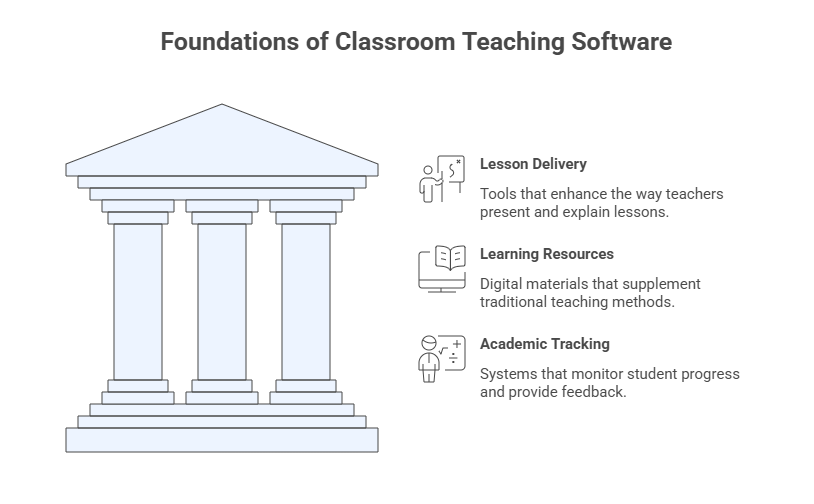
At a fundamental level, classroom teaching software acts as a structured layer that brings together lesson delivery, learning resources, and academic tracking in a way that aligns with daily classroom instruction. It supports how lessons are introduced, explained, reinforced, and reviewed, without disrupting the teacher-led nature of learning.
There are digital tools in the education space, such as those developed by NAVNEET TOPTECH through platforms like TopSchool, that are built around this idea of classroom support. These tools are designed to work alongside existing teaching practices, fit naturally into classroom routines, and align with school curricula. Their role is not to redefine teaching, but to provide teachers with a more organised, consistent, and supportive teaching environment.
Why Classrooms Need Teaching Software Today
Today’s classrooms are expected to address academic outcomes, learner engagement, and progress tracking simultaneously, often within limited instructional time.
Traditional teaching methods continue to play a central role, but on their own, they offer limited visibility into how students are responding to lessons in real time. As learning needs become more diverse and expectations from schools increase, classrooms require systems that can offer structure and insight without adding complexity.
This is where classroom teaching software becomes relevant, by addressing gaps that are difficult to manage through conventional approaches alone.
1. Limited Engagement in Traditional Teaching
In many classrooms, teaching still relies heavily on explanation-led instruction. While this approach works for some learners, others may struggle to remain attentive or actively involved throughout the lesson. Differences in learning styles and attention spans can make it challenging to sustain engagement across an entire class.
Without visual reinforcement or interactive elements, understanding often remains uneven, even when lessons are well taught.
2. Need for Personalized and Data-Driven Learning
Every classroom includes students who progress at different speeds and require varying levels of reinforcement. Identifying these differences early is essential, yet difficult to achieve consistently through observation alone.
Teachers and schools increasingly need access to clear learning indicators that show where students are performing well and where they may need additional support. Data-driven insights help bring clarity to these decisions, allowing teaching strategies to respond to actual learning patterns rather than assumptions.
How Classroom Teaching Software Improves Classroom Learning
Classroom teaching software improves learning by strengthening everyday teaching practices and making learning experiences more responsive. Its impact becomes visible through how lessons are delivered, how students engage, and how learning progress is monitored over time.
1. Strengthens Student Engagement
When lessons are supported by visual explanations, interactive content, and in-class activities, students are more likely to remain attentive and involved. A concept explained verbally can be reinforced through diagrams, short activities, or guided questions, helping students connect ideas more clearly.
This shift from passive listening to active participation makes it easier for students to stay engaged throughout the lesson.
2. Supports Personalized Learning Within the Classroom
Classroom teaching software allows learning to extend beyond a single pace or moment. Students who need additional reinforcement can revisit concepts, while those who grasp ideas quickly can engage more deeply without disrupting the flow of the class.
In practice, this helps teachers address learning differences without creating separate teaching tracks or increasing classroom complexity.
3. Improves Teaching Efficiency and Lesson Flow
By providing structured lesson support and organised teaching resources, classroom teaching software helps teachers manage lesson flow more effectively. Time spent switching between materials or coordinating activities is reduced, allowing teachers to focus on explanation and interaction. Over time, this leads to more consistent lesson delivery across classrooms and sections.
4. Enables Continuous Assessment and Feedback
Rather than relying only on periodic tests, classroom teaching software allows teachers to track understanding as lessons progress. Short assessments, activity responses, and participation indicators help identify learning gaps early.
This enables timely feedback and corrective instruction before misunderstandings become entrenched.
5. Reinforces Phygital Learning
Classroom teaching software supports a balanced blend of physical teaching and digital reinforcement. Lessons remain classroom-led, while digital tools help clarify concepts, reinforce practice, and support revision.
This phygital approach ensures that technology enhances learning without shifting focus away from the classroom environment.
Platforms like TopSchool bring these elements together in a classroom-focused system, helping teachers strengthen instruction while maintaining the structure and familiarity of physical classrooms.
What Schools Should Look for in an Effective Classroom Teaching Software
For schools, adopting classroom teaching software is not merely a technology decision. It is an academic and operational choice that influences how teaching quality is maintained across grades, how learning progress is monitored, and how academic consistency is achieved across classrooms and grade levels.
An effective classroom teaching software should therefore align with existing school systems, support teachers in their daily practice, and offer leadership clearer visibility into classroom learning, without introducing unnecessary complexity.
When evaluating classroom teaching software, schools should pay attention to a few core areas that determine whether the solution will genuinely support learning or introduce unnecessary inclusion of technology.
1. Curriculum Alignment and Academic Continuity
Classroom teaching software must reflect the curriculum schools are already committed to delivering. When digital content aligns closely with syllabus objectives, teachers can integrate it confidently into lessons without adjusting their teaching approach or worrying about continuity. This alignment ensures that digital support reinforces classroom instruction rather than competing with it.
2. Support for Classroom Teaching and Lesson Flow
In practice, teachers need tools that simplify teaching, not the ones that demand additional coordination. Effective classroom teaching software supports lesson delivery by helping teachers organise content, manage transitions during instruction, and maintain a steady classroom rhythm. Over time, this support contributes to more consistent lesson experiences across classrooms, while allowing teachers to retain autonomy in how they teach.
3. Academic Visibility and Learning Insights
As classrooms grow more diverse, schools need clearer visibility into how students are progressing. Classroom teaching software should offer meaningful academic insights that help teachers identify learning gaps early and adjust instruction accordingly. For school leaders, this visibility supports informed academic planning and timely intervention, shifting decision-making from reactive to proactive.
4. Consistency Across Classrooms and Communication
Maintaining consistent teaching quality across classrooms is a long-standing challenge for schools. A centralised classroom teaching platform helps align instructional practices while still allowing flexibility at the classroom level. It also supports clearer communication around learning progress, enabling better alignment between teachers, academic leadership, and parents.
Solutions such as TopSchool are designed with these school-level considerations in mind. By bringing together curriculum alignment, classroom support, and academic visibility within a single framework, such platforms help schools strengthen classroom learning while staying rooted in existing teaching practices.
Strengthening Classrooms Without Changing Their Core
Classroom teaching software finds its value not in changing how classrooms function, but in supporting them where modern demands have quietly grown. As classrooms accommodate diverse learning needs, evolving student engagement patterns, and greater expectations around academic outcomes, the role of supportive systems becomes increasingly important.
For schools, the true measure of effective classroom teaching software lies in how seamlessly it fits into existing practices. The most meaningful solutions are those that respect the rhythm of classroom teaching, reinforce curriculum goals, and help educators focus on what matters most, enabling understanding, continuity, and confidence in learning. It reinforces them, helping schools build learning environments that remain rooted in strong teaching while being better equipped to meet the realities of contemporary education.