Key Takeaways
- An Interactive Flat Panel (IFP) is a touch-enabled digital display that helps teachers deliver interactive lessons and access educational resources.
- Interactive flat panels for schools support visual learning, collaborative activities, and more engaging classroom instruction.
- Key features include 4K displays, multi-touch functionality, wireless screen sharing, digital whiteboards, and educational applications.
- The best interactive flat panel for education should match the school’s teaching requirements, connectivity needs, software compatibility, and budget.
- AI-enabled features can support lesson delivery and classroom activities, depending on the panel’s capabilities.
The classroom is no longer defined by chalk and talk. In an era shaped by smartphones, Artificial Intelligence (AI), and real-time access to information, students expect learning experiences that are interactive, intelligent, and engaging. Schools that delay digital transformation risk being left behind in an increasingly competitive and technology-driven education landscape.
Across India, institutions are upgrading their infrastructure to create smarter, more connected learning environments. At the center of this transformation is the Interactive Flat Panel (IFP) , a powerful, AI-enabled solution that is redefining how teachers teach and students learn.
What Is an IFP Panel (Interactive Flat Panel)?
An Interactive Flat Panel is a large-format, touch-enabled digital display designed for classrooms and collaborative environments. It combines the functionality of a traditional whiteboard, projector, computer, and audio system into a single integrated device.
Unlike projector-based systems that suffer from shadow interference, bulb replacements, and frequent maintenance, interactive flat panels offer:
- 4K Ultra HD, glare-free display
- Multi-touch interaction for simultaneous users
- Built-in Android or Windows operating systems
- Internet and cloud connectivity
- Integrated speakers and classroom-ready durability
Teachers can write, annotate, run applications, display videos, conduct quizzes, and access online resources all directly on the panel. This makes lessons more dynamic, visual, and engaging.
Why Schools in India Are Adopting Interactive Flat Panels
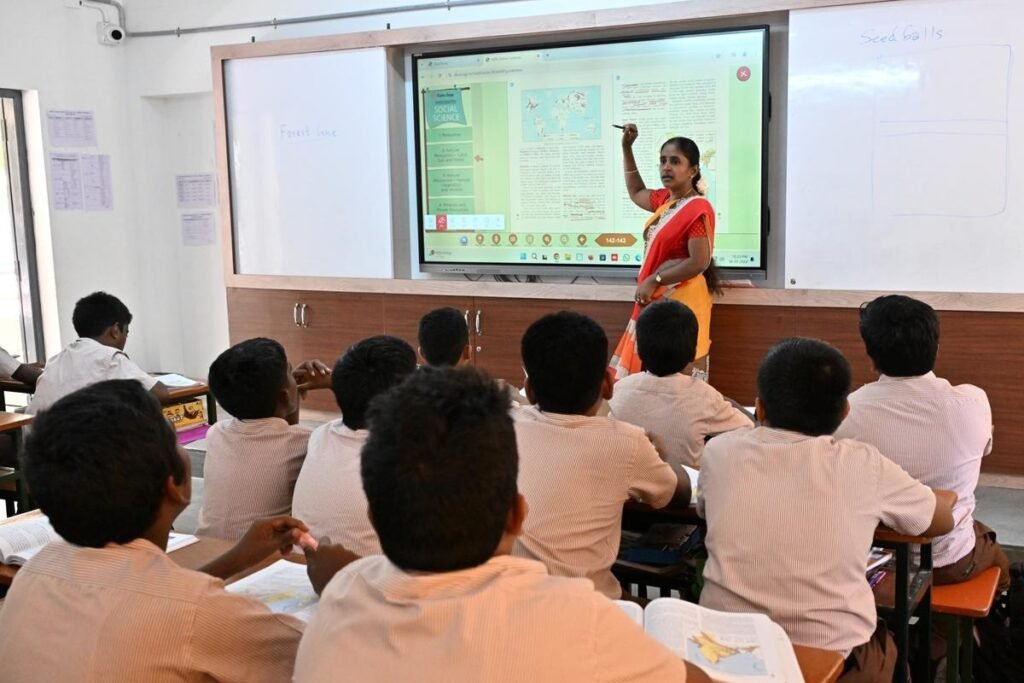
Interactive flat panels are becoming the preferred choice because they:
- Improve visibility and classroom engagement
- Reduce long-term maintenance costs
- Support hybrid and blended learning models
- Enable collaborative, student-centered teaching
- Integrate seamlessly with digital curriculum platforms
By adopting interactive flat panels, schools are not just upgrading hardware they are investing in future-ready education infrastructure.
Key Features of Interactive Flat Panels for Schools
1. 4K Ultra HD Display
Crystal-clear visuals enhance comprehension, especially for diagrams, charts, videos, and complex subjects.
2. Multi-Touch & Gesture Recognition
Supports multiple users writing or interacting simultaneously, encouraging collaboration and participation.
3. Wireless Screen Sharing
Teachers and students can instantly cast content from laptops, tablets, or smartphones, making lessons more flexible and interactive.
4. Built-in Educational Tools
Digital whiteboards, annotation features, split-screen functionality, and integrated apps simplify lesson delivery.
5. Cloud & LMS Integration
Lessons, assignments, and notes can be saved and accessed anytime through secure cloud platforms and learning management systems.
AI Integration: Transforming Interactive Panels into Intelligent Learning Systems
While interactive displays improve engagement, AI integration elevates them to the next level.
AI-powered interactive flat panels provide:
- Smart content suggestions based on subject context
- Intelligent handwriting recognition
- Voice-enabled commands and assistance
- Real-time classroom insights
- Automated administrative support
This shift from “digital display” to “intelligent system” is what defines the future of smart classrooms in India.
NAVNEET TOPTECH AI-Powered Interactive Flat Panels
For schools seeking reliable, AI-enabled classroom technology, NAVNEET TOPTECH offers advanced interactive flat panels specifically designed for Indian education environments.
Our panels combine robust hardware with intelligent software, ensuring long-term performance, seamless usability, and scalable digital infrastructure.
Strengthened by Strategic Partnerships
NAVNEET TOPTECH collaborates with leading technology innovators to deliver best-in-class solutions
- Cybernetyx – Enhancing AI-driven classroom innovation and experiential learning integration
- Hikvision – Supporting high-performance 4K display systems and durable hardware technology
These partnerships ensure that schools receive both cutting-edge AI capabilities and dependable display infrastructure.
Benefits of NAVNEET TOPTECH Interactive Flat Panels for Schools
Schools adopting NAVNEET TOPTECH’s AI-powered interactive flat panels experience:
✔ Increased student engagement through immersive learning
✔ Improved teaching efficiency with intelligent tools
✔ Seamless integration with digital curriculum
✔ Secure, scalable classroom technology
✔ Reduced operational and maintenance challenges
Our solutions are built to support CBSE, ICSE, state boards, and international curriculums, making them suitable for institutions across India.
The Future of Smart Classrooms in India
The future of education is interactive, connected, and data-driven. AI-powered interactive flat panels support:
- Hybrid and remote learning capabilities
- Digital assessments and performance tracking
- Collaborative, student-led learning
- Smart campus expansion
- Long-term digital scalability
As technology continues to shape the learning experience, schools must adopt infrastructure that is not only modern but also intelligent and adaptable.
Interactive flat panels are no longer a luxury — they are an essential investment in Book a Live Demo Today by visiting navneettoptech.com
FAQs
Q1. What Is an IFP Panel Used for in a Classroom?
An IFP panel is used to display lessons, annotate content, access educational applications, conduct interactive activities, and share digital resources. It helps teachers combine multiple classroom teaching tools on one screen.
Q2. Why are interactive panels for schools becoming popular in India?
Interactive panels for schools are becoming popular because they support visual learning, improve student participation and make classroom teaching more effective. They also reduce maintenance compared to projectors and help schools build technology-enabled classrooms for long-term learning needs.
Q3. What Should Schools Consider When Choosing the Best Interactive Flat Panel for Education?
Schools should compare display quality, touch responsiveness, operating system, connectivity, educational software compatibility, warranty, and after-sales support. The right choice depends on classroom size, teaching needs, and available infrastructure.
Q4. What is the main advantage of AI powered teaching boards for teachers?
The main advantage of AI powered teaching boards for teachers is that they make classroom teaching faster and more efficient. Teachers can access content easily, use smart classroom tools, and manage lessons with less manual effort while keeping students more engaged.
Q5. Are interactive flat panels suitable for all schools?
Yes. Interactive flat panels can support schools across CBSE, ICSE, state boards, and other curriculum types. They are useful for different grade levels and can be adapted based on classroom requirements and digital learning goals.
Q6. How do interactive panels improve student engagement?
Interactive panels make lessons more visual and hands-on. Students can participate directly, view concepts clearly, and stay more involved during classroom activities, which improves overall engagement and classroom interaction.
Q7. How Are Interactive Panels Different from Projector-Based Smart Classrooms?
Interactive panels use an integrated display that supports direct touch and writing, while projector-based classrooms project images onto a screen or board. Panels generally avoid projector shadows and bulb replacement, although maintenance requirements vary by device.